Here’s a brief summary of some of the main research articles pertaining to CIST – Constraint-induced sound therapy.
Article 1
Neuro-rehabilitation Approach for Sudden Sensorineural Hearing Loss
This is the main article – it outlines the methodology of CIST.
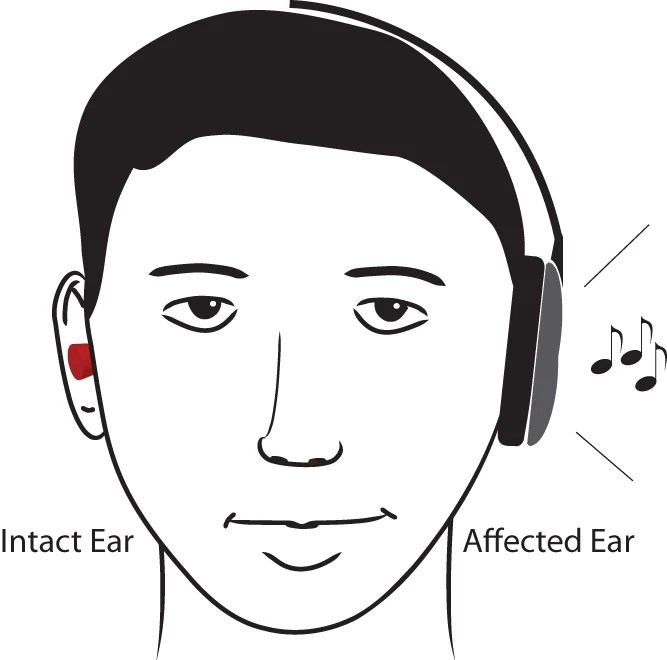
This article proposes a neuro-rehabilitation approach to prevent maladaptive cortical reorganization in SSHL patients. This approach, called ‘constraint-induced sound therapy (CIST),’ encourages patients to use and pay attention to the affected ear for listening, aiming to maintain neural connections between the affected cochlea and auditory cortex. CIST is seen as a safe, cost-effective, and potentially more effective treatment than traditional pharmacotherapy for SSHL.
The canal of the intact ear of SSHL patients is plugged in order to motivate them to actively use the affected ear and thereby prevent progress of maladaptive cortical reorganization. The affected ear is also exposed to music via a headphone for 6 hr per day during hospitalization.
Method
Here’s is a summary of the method outlined in the paper.
1. Hearing Measurement

Obtain an audiogram by measuring the frequency response of the person’s hearing in both ears.
2. Block the good ear
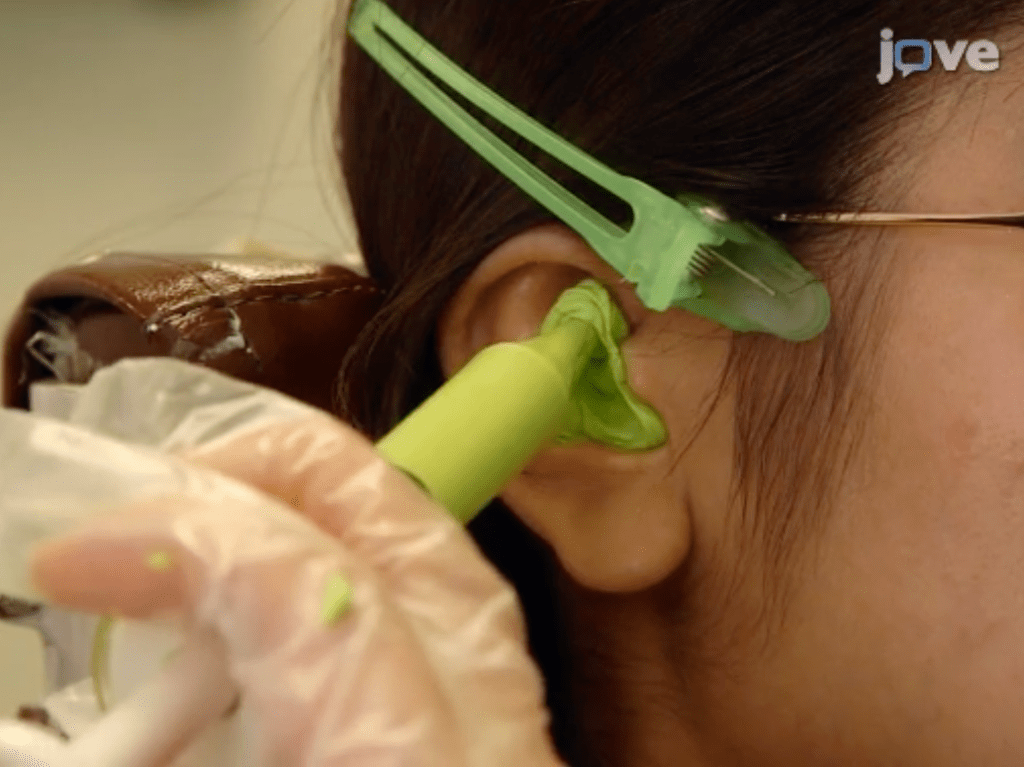
3. Use a Graphic Equaliser to EQ the music to compensate for the hearing loss in the bad ear.
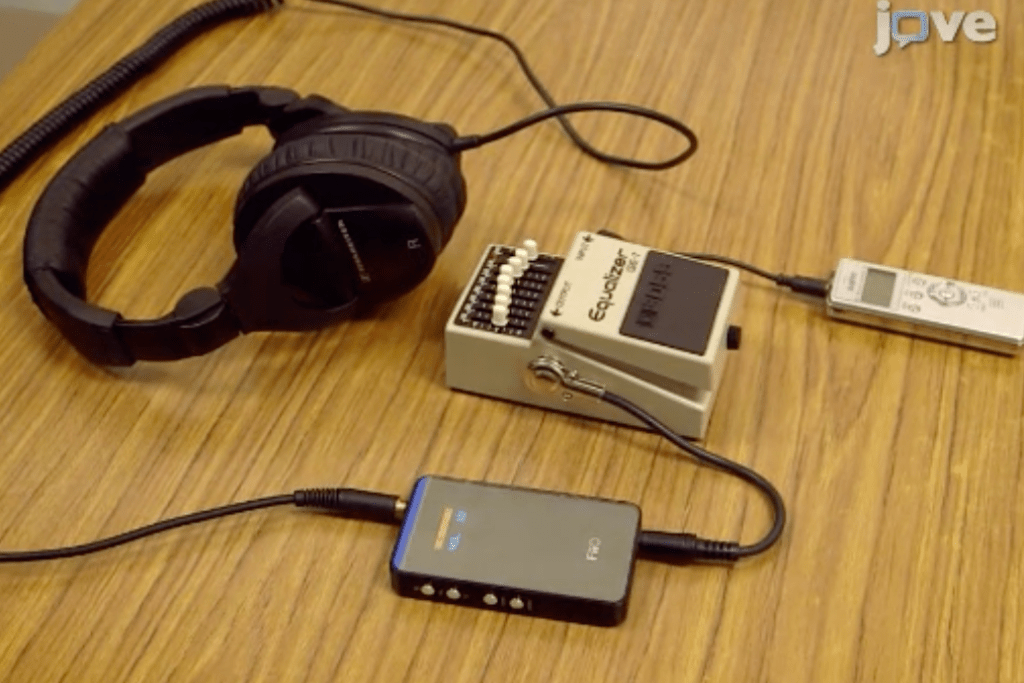
4. Listen for 6 hours a day to this ‘equalised’ music

This article is worth reading in full and understanding. There’s also a video with it.
Here’s the original article: https://www.ncbi.nlm.nih.gov/pmc/articles/PMC4781698/#:~:text=The%20aim%20of%20the%20CIST,progress%20of%20maladaptive%20cortical%20reorganization.
Article 2
Neuro-rehabilitation Approach for Sudden Sensorineural Hearing Loss
A good video and summary of the methodology by the same authors as the article above.
https://www.jove.com/v/53264/neuro-rehabilitation-approach-for-sudden-sensorineural-hearing-loss
This article can be downloaded as a pdf file from here:
Article 3
Constraint-induced sound therapy for sudden sensorineural hearing loss – behavioral and neurophysiological outcomes
An article from nature.com explaining how CIST is adapted from constraint-induced therapy with stroke patients.
“Constraint-induced sound therapy thus appears to be an effective, practical and safe treatment option for sudden sensorineural hearing loss.”
nature.com
Article 4 – A spanish Study on SSHL
Terapia sonora en sordera súbita
“Sound therapy The combination of music and words has been used by using the songs that the patient likes most or listening to radio stations, interchangeably. In this way, it is intended that the entire cochlear spectrum and its auditory cortical representation will be stimulated, and can also reach different emotional brain regions (prefrontal, temporal or parietal) through the neural networks to stimulate their recovery. The practical way of Getting the appropriate intensity for each patient is as follows: they are told to place the earphone in the healthy ear with the music and when they begin to hear it minimally (range of 60 ± 10 dB) to put it in the diseased ear. It may be that at that moment you do not hear it through the ear of sudden deafness, being able to hear it when hearing recovery occurs. Even if cophosis has occurred, the same procedure is followed. The duration of sound therapy is 12 hours a day for 30 days. This sound therapy was applied to the second group of patients (n = 67) together with the medication.”
Translated by Google from Terapia sonora en sordera súbita
Article 5
Sound Therapy in Sudden Deafness
The patients who recovered more than half of their audition accounted for 54% in the group treated with medication and for 79% in the group of patients receiving medication and sounds. Auditory recuperation showed no alterations, at least up to 12 months after therapy.
Article 6
Neuromagnetic Index of Hemispheric Asymmetry Prognosticating the Outcome of Sudden Hearing Loss
A complicated article exploring brain plasticity and SSHL.
 CIST and SSHL