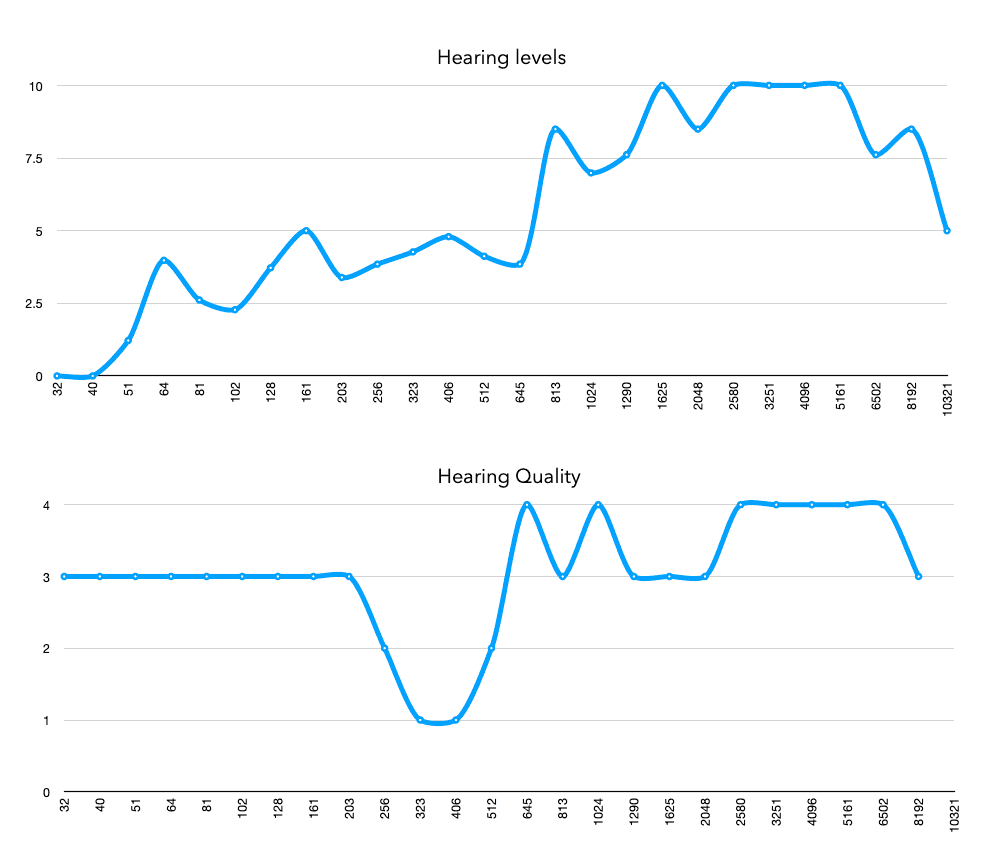
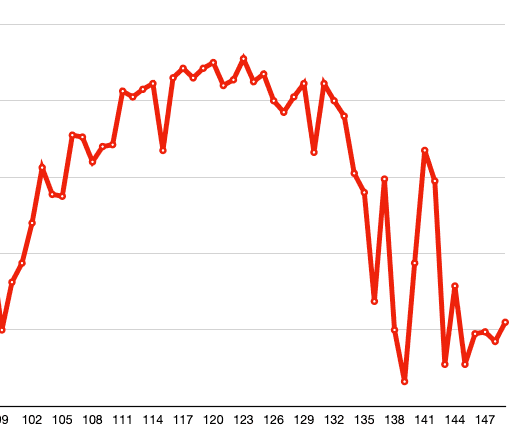
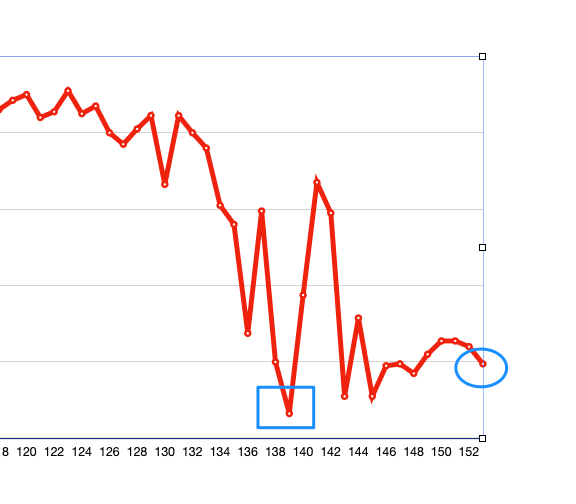
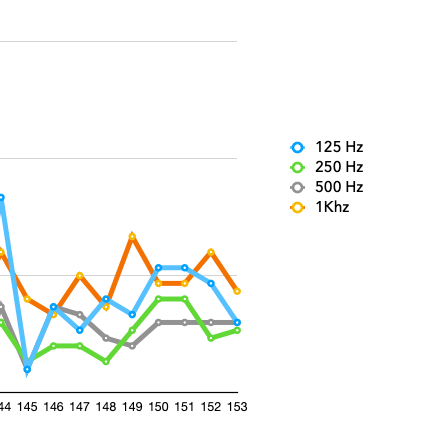
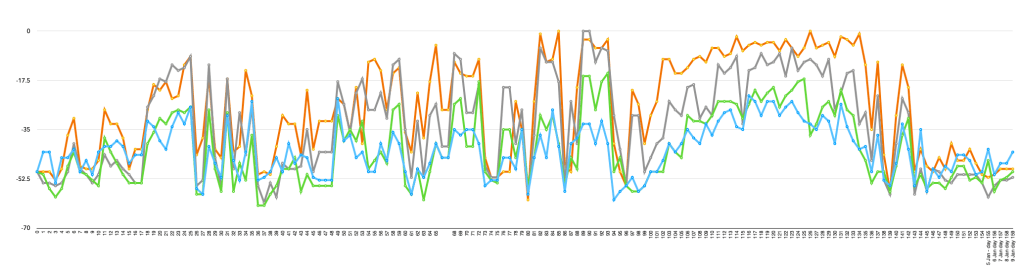
In 1 week I will have had SSHL for 6 months. I had no idea that my hearing 6 months would be just as bad as the day it all started. I had no idea that a month ago my hearing would be almost back to normal and then drop again.
All the literature and my own ENT specialist talk about improving, but none of them talk about going backwards.
So the last couple of days I wrote this summary of my thinking and the way my understanding has grown about this problem that I have.
”A new approach to SSHL needed? (pdf)
Here’s the text of the article:
Brain Plasticity and SSHL – a new approach needed.
Wayne Connor Dec 2023
Brain Plasticity and SSHL – a new approach needed.
Wayne Connor Dec 2023
I have had Sudden Sensorineural Hearing Loss (SSHL) for just under 6 months. SSHL is defined as greater than 30dB of hearing loss in greater than 3 frequencies in under 3 days. It’s a sudden deafness in one ear.
The longer it goes on the more I’m realising there’s a problem in the way the medical world approaches this condition. Currently all kinds of hearing disorders are lumped together under the heading of ‘SSHL’.
The cause can be anything from a viral infection (including COVID) to a blood flow problem, or trauma, autoimmune disorders, stress, or the side effect of other medications. Moreover the location of the cause of the SSHL can vary: the cochlea hair cells, or the nerves that connect the cochlea to the brain, or the brain itself, including the higher level auditory cortex. Not to mention each of those areas can be broken down into more detail.
One audiologist may say ‘be careful with loud noises’ because if the damage is to the cochlea hairs, of course you want to protect them from further damage. But if the problem is that the auditory cortex is confused, it may actually need stimulation to repair itself. So the generic term SSHL at that point is not helpful.
Diagnosing someone with SSHL is about as useful as saying ‘your car won’t start’. One car might be fixed with a new battery. Another by changing the spark plugs, and another by filling the car with fuel. Sure, the WD40 might help wherever you spray it, but after you’ve sprayed it everywhere, what next?
The standard treatment (the WD40 of SSHL) is steroids. Prednisolone apparently targets all the areas potentially involved in SSHL. It can assist if the hair cells are damaged, reduce inflammation anywhere along the pathway from the chochlea to the brain, and it suppress the immune system which may be damaging the hair cells or nerves. But what if the steroids don’t work, or only partially restore the hearing. Here lies the big problem, with such a broad diagnosis (SSHL) how can you begin to treat it?
In Australia the problem is exacerbated by the specialising of doctors into areas. So there may be an Ear, Nose and Throat specialist, an audiologist, or a neurologist, but who of those best deals with SSHL? It’s like my car won’t start, but do I go to an auto electrician, or a carburettor specialist?
As my SSHL has progressed I suspect it’s become, or always was, neurological. By that I mean the problem has moved from the inner ear (if it as ever there, but I suspect that it was) to my brain.
If you take a look at my hearing graph on my blog, it is very erratic. My ENT said SSHL doesn’t go backwards, and my audiologist said my hearing shouldn’t swing so far daily like that. Which leads me to conclude that perhaps it’s the brain causing the problem, not the ear.
The most recent theories out there are that when the brain stops receiving signals from one ear, it re-wires itself somewhere in the signal chain to listen to the other ear – your good ear. The signals from each ear travel into the brain and are combined at several points, in the brain stem but finally in the auditory cortex. The way this happens is very complex. When your brain receives no input from one ear, it can re-wire itself to stop listening to the bad ear. Studies show this happening within 72 hours of hearing loss. When 3 or 4 days later, your ear heals, it’s possible that your brain is so re-wired that it’s stopped listening to that ear. It’s like being put on hold on a phone for so long that you hang up. The brain has ‘hung up’ on your ear.
My suspicion is this is why they say that SSHL is a medical emergency. It needs to be treated in the first 72 hours. It’s possible that the physical condition needs treatment in the first 72 hours. But it’s also possible that 72 hours is how long it takes the brain to re-wire itself. So the 72 hour window might be critical to fix the physical condition before the brain re-wires. This explains why some people can regain hearing after 72 hours. The brain can re-wire itself. It’s just harder. It also explains why the more severe the hearing loss, the more likely it is to be permanent. If the loss of hearing in the deaf ear is greater than the cross-hearing (50dB), then any sound into the bad ear will in reinforce the ‘bad’ wiring.
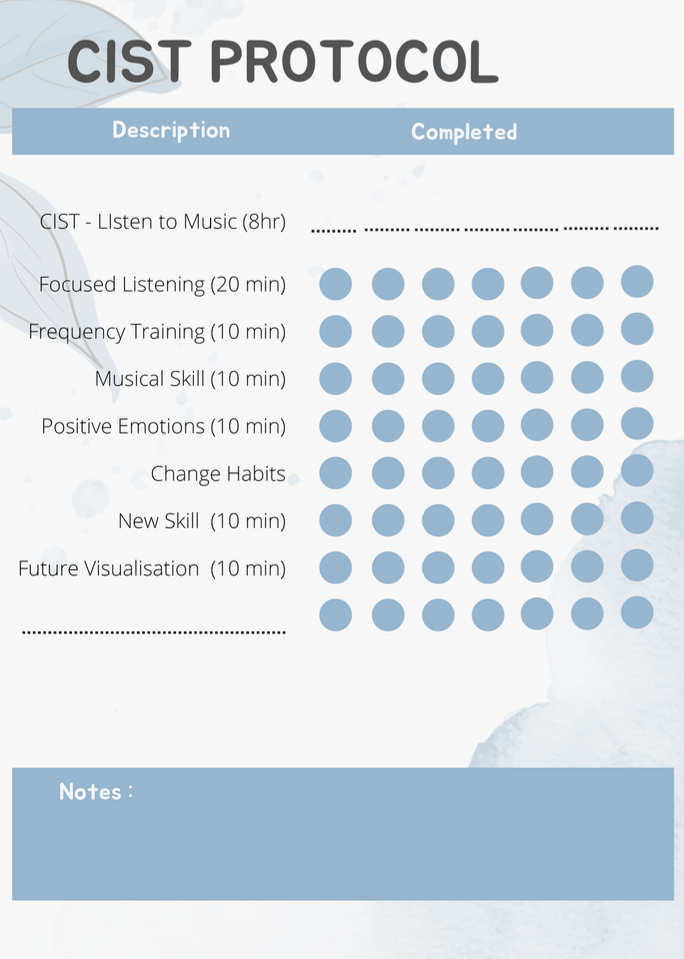
One proposed treatment for this is called CIST. To encourage the brain to re-wire itself back again you stimulate the bad ear with music.
The idea was introduced in 2014
“Constraint-induced sound therapy for sudden sensorineural hearing loss – behavioral and neurophysiological outcomes”
Okamoto,Fukushima et al. 2014
This paper from 2016 explains it in more detail:
“Neuro-rehabilitation Approach for Sudden Sensorineural Hearing Loss”
Sekiya, Fukushima
These papers found no improvement from CIST:
Neuroplastic Effect of Constraint-Induced Music Therapy on Hearing Recovery in Patients with Sudden Sensorineural Hearing Loss. (2019)
Effect of Constraint-Induced Music Therapy in Idiopathic Sudden Sensorineural Hearing Loss: A Systematic Review and Meta-Analysis (2022)
These studies found improvements using CIST:
Effect of Combining Sound Therapy with Pharmacotherapy on the Recovery of Hearing Abilities in the Case of Sudden Sensorineural Hearing Loss: A Prospective Study (2022)
Sound therapy in sudden deafness (in Spanish) M.A. López-González (2017)
So it’s a bit hard to know is CIST helps, but it’s certain there is a brain plasticity issue.
What is CIST? (Constraint-induced sound therapy)
CIST is a therapy that combines standard medical treatment (like corticosteroids) with auditory stimulation. The idea is to force the brain to pay attention to the affected ear by plugging the healthy ear and listening to music or other sounds through headphones on the deaf ear for several hours a day. This increased stimulation is believed to promote neuroplasticity, the brain’s ability to reorganize and adapt, which could help to recover hearing and prevent auditory deprivation.
“Scientists are testing a new way to treat sudden hearing loss. It’s like how they help stroke patients regain movement: by forcing the brain to use the affected part. Here’s how it works for hearing:
- Plug the good ear. This makes the brain focus on the ear that’s not working well.
- Listen to music in the bad ear for 6 hours a day. This gives the brain lots of sound to work with, kind of like exercising the ear.
The goal is to:
- Stop the brain from giving up on the bad ear. When hearing loss happens, the brain can start to ignore the bad ear and focus on the good one. This new therapy tries to prevent that.
- Help the brain rebuild connections to the bad ear. This could help people hear better again.
[Constraint-induced sound therapy for sudden sensorineural hearing loss – behavioural and neurophysiological outcomes 2014]
The following articles explain all this in a bit more depth: I’ve used Google Bard to help summarise some of these papers. T
Brain rewiring in SSHL
Normally, sound triggers stronger brain activity in the opposite side of the brain. When one ear loses hearing, this still happens for the deaf ear. But for the good ear, the brain acts differently: it relies more on the same side instead of the opposite.
[“Healthy-side dominance of cortical neuromagnetic responses in sudden hearing loss” (An-Suey Shiao)]
Brain rewiring in SSHL
The brain reorganises itself after hearing loss in order to compensate for the loss of hearing. The ipsilateral dominance observed in this study is a new finding and could have implications for understanding and treating hearing loss.
[“Healthy-side dominance of middle- and long-latency neuromagnetic fields in idiopathic sudden sensorineural hearing loss “(2006)]
Higher level brain rewiring in SSHL
Sudden hearing loss can affect the brain, not just the ears. The brain may try to adapt by changing its activity patterns. More research is needed to understand these changes and develop better treatments.
“The advancement of imaging technology has revealed that individuals with SSHL exhibit not only alterations in brain cortical and subcortical structures but also associated with changes in brain functional activities involving various brain networks such as the default mode, auditory, executive control, and visual networks.”
[Altered static and dynamic intrinsic brain activity in unilateral sudden sensorineural hearing loss – August 2023 Frontiers in Neuroscience 17]
SSHL and the Auditory Cortex
“SSHL affects neural activity not only in the cochlea, but also in the auditory cortex. Several neuroimaging studies suggested that SSHL induced cortical plasticity in the human auditory cortex within a few days of its onset. Moreover, the degree of cortical reorganization represented by the loss of contralateral hemispheric dominancy of the auditory evoked fields appeared to negatively correlate with recovery rates from hearing loss. The cortical plasticity induced by the onset of SSHL may be considered as maladaptive for the hearing capability of the affected ear. Therefore, the prevention of this maladaptive cortical reorganization associated with SSHL may represent a new treatment strategy.”
[Neuro-rehabilitation Approach for Sudden Sensorineural Hearing Loss 2016]
Brain learns not to hear.
Maladaptive cortical reorganization refers to changes in the auditory cortex that can occur after SSHL. These changes are thought to be harmful and may contribute to the difficulties some people experience in recovering their hearing. The exact cause of maladaptive cortical reorganization is unknown, but it is thought to be related to changes in brain activity after the inner ear is damaged. Maladaptive cortical reorganization can lead to the “learned non-use” of the affected ear, meaning the brain stops paying attention to sounds coming from that ear. This can make it harder to recover hearing and can also lead to tinnitus.
[Neuro-rehabilitation Approach for Sudden Sensorineural Hearing Loss January 2016 Journal of Visualized Experiments 2016(107)]
Can we reversing the Brian re-wiring?
Cortical structures in the adult human brain were previously considered to be non-elastic; however, recent studies have revealed that the adult brain can be reorganized based on its surrounding environment and behavior. Reorganization in the human auditory cortex generally occurs in a direction that is preferable for fulfilling demands; however, it may also induce pathological phenomena in the auditory system such as tinnitus. Therefore, it appears to be important to develop suitable neurorehabilitation approaches to treat maladaptive reorganization in the auditory system.
[“Investigating the maladaptive cortical reorganization in the human auditory cortex using magnetoencephalography” 2020]
Spanish Trial
The study by López-González et al. (2017) investigated the efficacy of a new treatment for sudden sensorineural hearing loss (SSNHL). The treatment consisted of acoustic stimulation with sounds delivered through headphones for one month. The results showed that the treatment group had a significantly better hearing recovery than the control group. At the end of the study, the mean hearing improvement in the treatment group was 20 decibels (dB), compared to 4 dB in the control group. The authors concluded that acoustic stimulation is an effective treatment for SSNHL. The treatment is especially effective when it is started early.
Summary in English of the study by M.A. López-González et al. (2017)
Google Bard can you give me a simple explanation of ‘Maladaptive cortical reorganization’ (Note this is just a summary of the information available to Google Bard, it’s not intelligent at all)
Maladaptive cortical reorganization is a fancy way of saying that the brain rewires itself in a way that actually causes problems rather than helping.
Imagine your brain is like a city, and the streets are connections between different parts. When you suddenly lose hearing, it’s like a major road closure – the sounds that used to travel to your auditory area (the hearing neighborhood) can’t get through anymore. Now, the city doesn’t like empty streets, so it starts rerouting things. When the ear tries to send a signal again, it hits a traffic jam of a dead end.
This rewiring can also lead to problems like:
- Phantom sounds: Hearing sounds that aren’t actually there, like ringing or buzzing in the ears (tinnitus).
- Speech in noise problems: Having difficulty understanding speech in noisy environments.
Here are some things that can be done to help prevent or reverse maladaptive cortical reorganization:
- Early intervention: The sooner you start treatment for hearing loss, the less likely it is that your brain will have time to rewire itself in a maladaptive way.
- Sound therapy: Listening to sounds through the affected ear, like music or white noise, can help to keep the auditory cortex active and prevent it from being taken over by other sensory areas.
- Brain training: There are some new brain-training programs that are being developed to help people with hearing loss learn to use their brains more effectively to process sound.