CIST article in National Library of Medicine 2016 Sekiya & Fukushima
This is building on the 2014 article. It outlines the methodology of CIST. Here is summer of CIST:
The canal of the intact ear of SSHL patients is plugged in order to motivate them to actively use the affected ear and thereby prevent progress of maladaptive cortical reorganization. The affected ear is also exposed to music via a headphone for 6 hr per day during hospitalization.
Summary of article
(Comments in brackets are my thoughts, not from the article).
When an ear goes deaf for a short amount of time the brain reorganises itself so that the entire brain uses the good ear. If the ear is healed, the brain may have stopped listening to the ‘bad’ ear. So you go permanently deaf even though the ear is now good. The deafness is now neurological not physical. By playing music into the bad ear, and ‘constraining’ or blocking the good ear, you can force the brain to re-learn to use the ‘bad’ ear. This approach is called ‘constraint-induced sound therapy (CIST)’ and based on the plasticity of the brain.
(My note: CIST only works for SSH if the underlying physical condition has improved. If the condition improves before the brain had disorganised itself CIST may not be needed. This may explain explain why doctors talk about a ’72 hour window’ to diagnose SSHL. After this time the brain may have re-wired itself and gone permanently deaf. CIST can possibly reverse this ‘permanence’ and train the brain to hear again. )
The article suggests only using CIST if the difference in hearing levels between the 2 ears is less than 50dB. “Confirm that the hearing level difference between ears averaged across 500, 1,000, and 2,000 Hz is less than 50 dB “.
(My note: The reason for this is that if difference between ears is greater than 50dB it’s possible you are hearing the music in the wrong ear due to conduction inside your head. This would be counterproductive as you would be training your brain to listen to the ‘wrong’ ear. So make sure you are hearing the music in your ‘bad’ ear not your good ear. )
Summary:
1. Hearing Measurement

Measure the frequency response of the person’s hearing.
2. Block the good ear

They use a plastic plug. (I have found the MACKS silicone plugs are great, especially if you use 2 at once in the same ear.)
3. Use a Graphic Equaliser to EQ the music to compensate for the hearing loss.
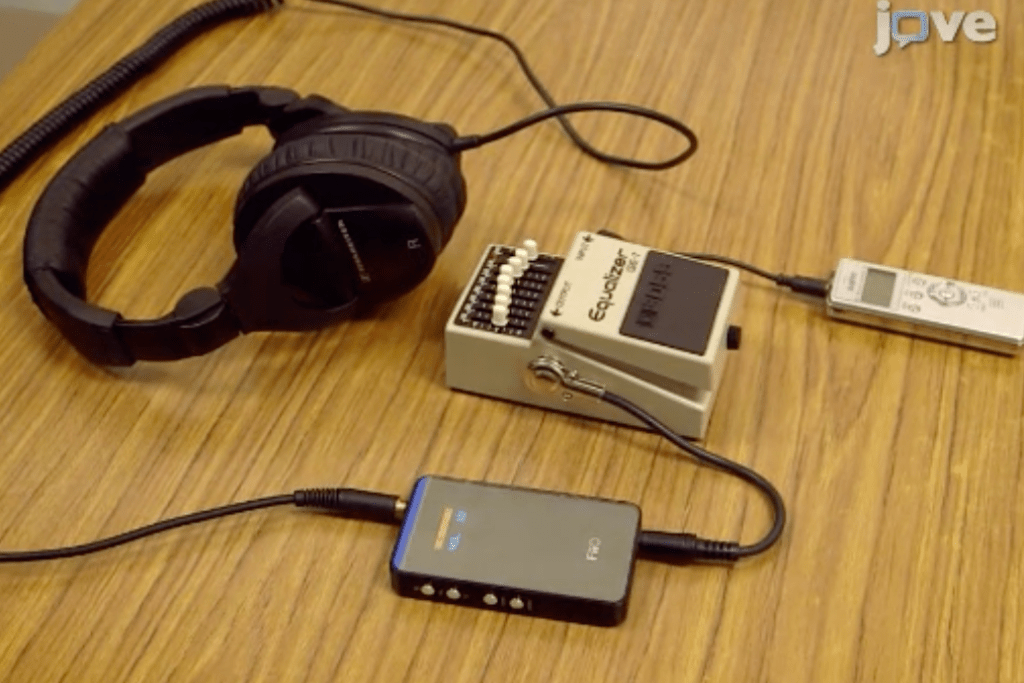
(This can be done simply with an iPhone or Android phone and the equaliser built into Spotify.)
4. Listen for 6 hours a day to the equalised music.

(I found 8 hours a day was better, but it’s actually very hard to actively listen to that much music in a day!)
 CIST and SSHL